The Legal Framework for Protecting Public Funds from Cyberattacks: Balancing National Security Requirements and the Protection of Public Services
DOI:
https://doi.org/10.65998/ljsdr.v2i2.31Keywords:
Public Funds, Cybersecurity, National Security, Public Utilities, Cybercrime, Digital SovereigntyAbstract
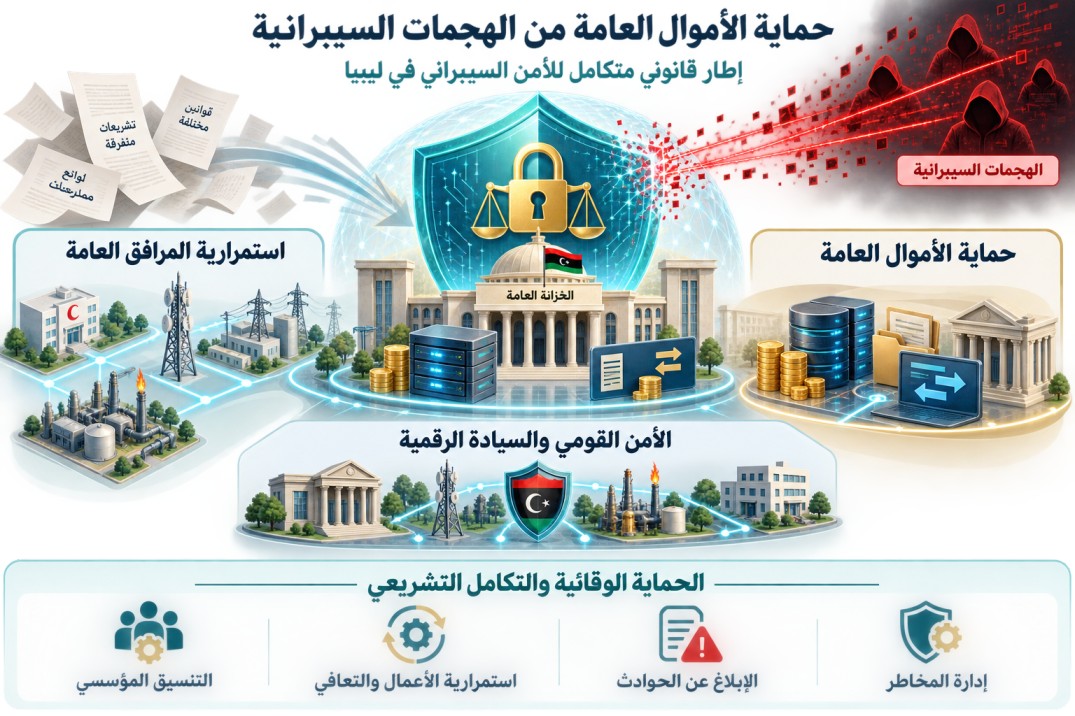
This study examines the legal framework for protecting public funds from cyberattacks in Libya, emphasizing national security and the continuity of public utilities. It assesses the adequacy of existing legislation and institutional arrangements in addressing cyber threats arising from the digital management of public funds and services. A descriptive-analytical approach is employed to examine relevant provisions of the Libyan Civil Code, economic crimes legislation, cybercrime and electronic transactions laws, and the 2026 decision establishing the National Authority for Cybersecurity and Digital Sovereignty. The findings indicate that effective protection must extend beyond traditional public funds to encompass associated digital assets, platforms, systems, and data. Although Libyan legislation provides important protective mechanisms, their dispersion across multiple laws limits legal coherence and highlights the need to clarify the legal status of public digital assets. Cyberattacks affecting critical institutions and infrastructure may disrupt essential services and threaten economic stability and national security. Consequently, cybersecurity is closely linked to the regularity and continuity of public utilities. Establishing the National Authority represents a significant shift toward preventive institutional protection through risk management, supervision, and incident response. The study recommends an integrated, proactive national cybersecurity framework incorporating critical infrastructure classification, mandatory incident reporting, improved digital evidence rules, business continuity and recovery planning, and stronger coordination among judicial, security, financial, and regulatory authorities. Such measures would strengthen the protection of public funds, sustain essential services, and safeguard national security and digital sovereignty.
Downloads
Downloads
Published
Issue
Section
License
Copyright (c) 2026 Libyan Journal of Sustainable Development Research

This work is licensed under a Creative Commons Attribution 4.0 International License.