Investment Pathways for Renewable Energy: Opportunities, Challenges and Policy Directions
DOI:
https://doi.org/10.65998/ljsdr.v2i2.14Keywords:
Renewable energy investment, Power-grid modernization, Battery energy storage, Electrified transport, Energy-transition policyAbstract
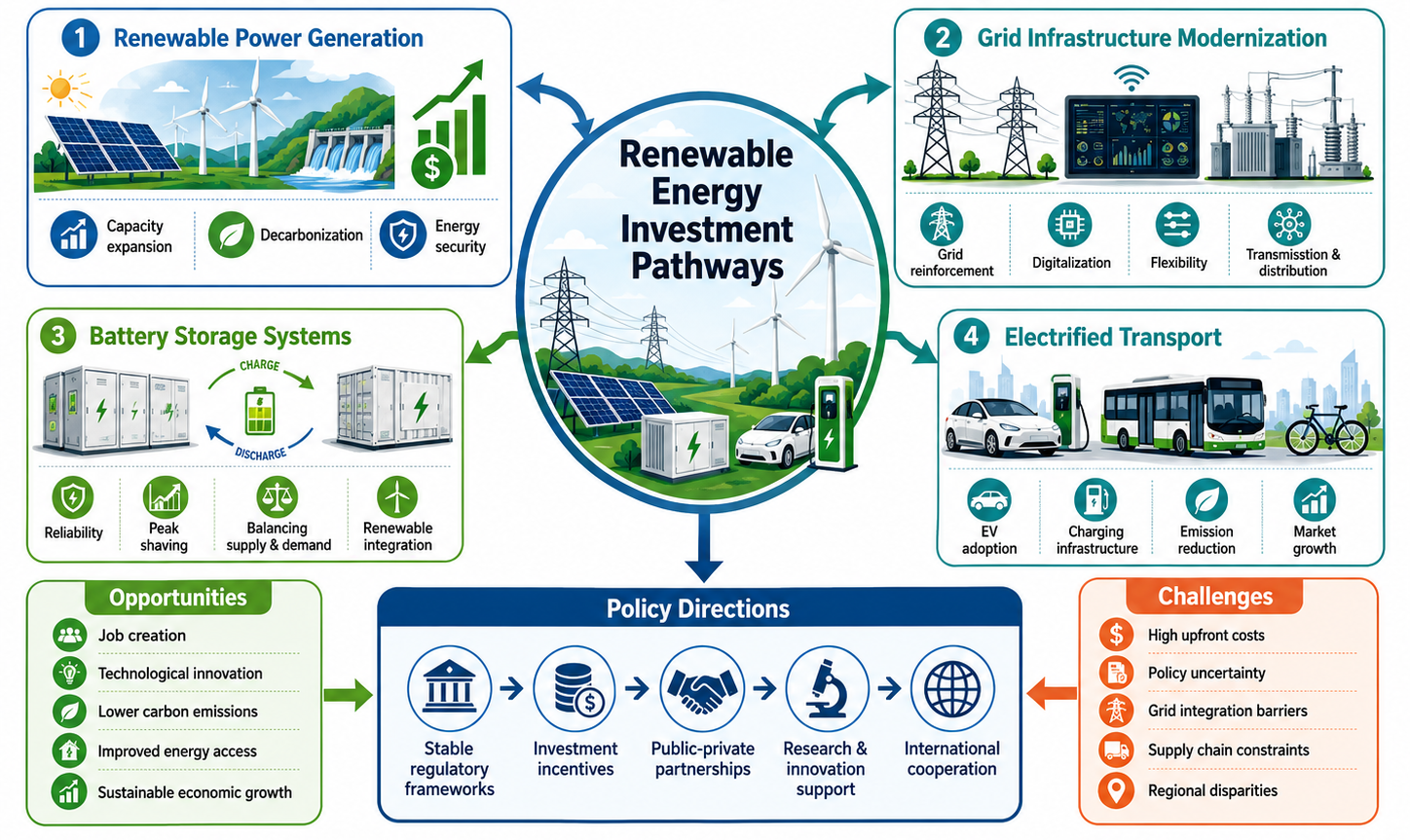
The global transition toward low-carbon energy systems requires substantial and coordinated investment across renewable power generation, power-grid infrastructure, battery storage, and electrified transport. This article examines the principal investment pathways shaping these interconnected sectors and evaluates their contribution to energy security, system flexibility, decarbonization, and sustainable economic development. It first reviews investment trends and financing requirements for renewable power technologies. The analysis then considers the modernization and expansion of transmission and distribution networks, emphasizing the importance of grid reinforcement, digitalization, and improved planning to accommodate increasing shares of variable renewable energy. Battery storage is assessed as a critical enabling technology for enhancing reliability, balancing supply and demand, reducing curtailment, and supporting greater renewable penetration. The article also evaluates investment in electrified transport, including electric vehicles and charging infrastructure, with particular attention to policy incentives, market growth, and regional disparities. Furthermore, it identifies key opportunities related to technological innovation, private-capital mobilization, domestic industrial development, employment creation, and improved energy access. Major challenges include high financing costs, regulatory uncertainty, grid congestion, supply-chain constraints, and affordability concerns. Based on these findings, the article proposes policy recommendations focused on stable investment frameworks, blended finance, accelerated grid development, dedicated storage markets, integrated EV infrastructure planning, and stronger domestic capabilities. The study concludes that coordinated, technology-specific, and inclusive investment strategies are essential for closing current financing gaps and achieving reliable, affordable, and sustainable energy-transition pathways.
Downloads
Downloads
Published
Issue
Section
License
Copyright (c) 2026 Libyan Journal of Sustainable Development Research

This work is licensed under a Creative Commons Attribution 4.0 International License.